

Alternative Proteins in the Bioeconomy Era: Reshaping the Future of Food Systems
With the global population expected to reach 10 billion by 2050, the demand for sustainable, nutritious food is rising at an unprecedented pace - especially protein. Traditional livestock farming, while effective, makes up for a substantial share of greenhouse gas emissions, land degradation, and water usage. As the bioeconomy era is shaped – where economic growth is decoupled from the finite fossil resources and centered around renewable biological systems – alternative proteins are gaining prominence as key solution. Alternative proteins derive from a diverse range of sources: plant-based proteins (soy, chickpeas, lentils), insect-derived proteins (crickets, black soldier flies, mealworms), microbial (fungi, yeast, bacteria) and algal proteins (like chlorella and spirulina), fermentation-derived compounds, and cultivated (lab-grown) meats.
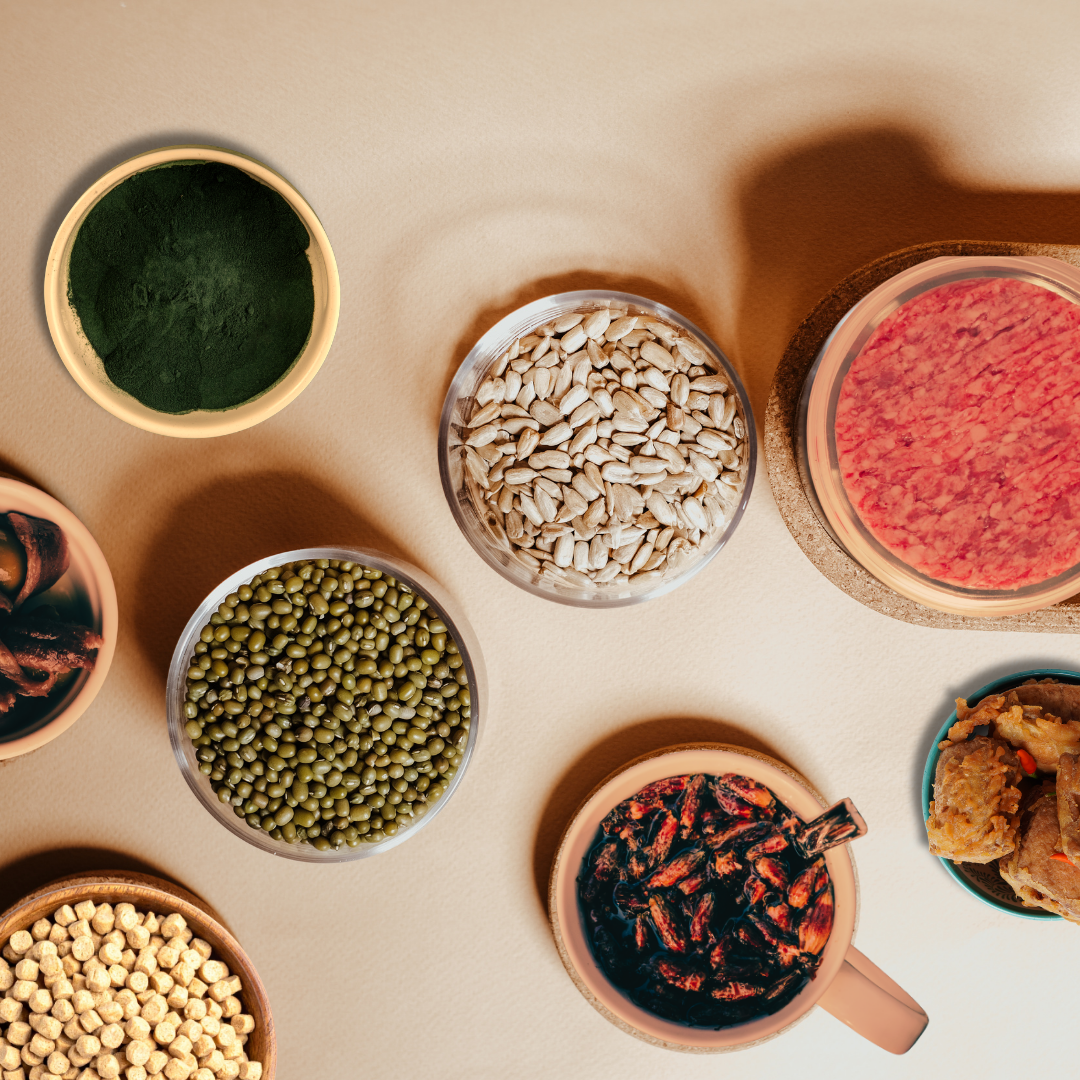
Even if some alternative proteins are cutting-edge and innovative, other like plant-based proteins have been nourishing people around the globes for years. However, these innovations deliver substantially lower environmental footprints. For instance, mycoprotein production results in approximately 94% lower climate change impact per kg of protein than beef, and requires only 500 L of water per kg of protein compared to 15,000 L for beef production. Likewise, insect farming enables the transforming of food waste into high-protein biomass, promoting a circular economy model.
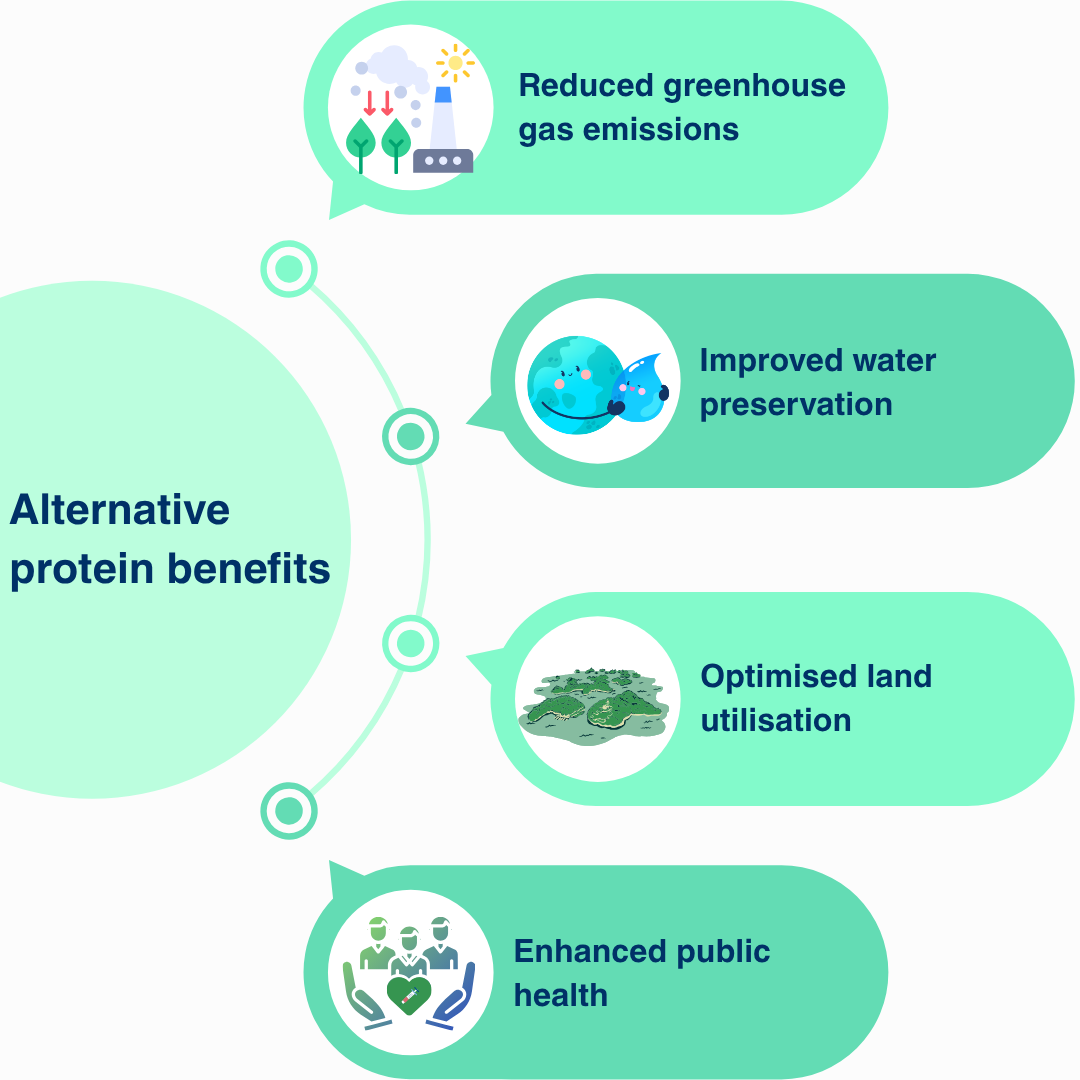
Beyond the environmental gains, these novel sources align strategically with the broader bioeconomy frameworks. Insects fed on agricultural and food-industry byproducts, for example, can support zero-waste systems. Meanwhile, microbial fermentation, driven by advances in synthetic biology, allows for the production of animal-free dairy or egg proteins using engineered microbes, seamlessly integrating into biorefineries alongside biofuels and biomaterials.
Despite the promising advances, several challenges still persist. Consumer skepticism, regulatory ambiguity, complexities on nutritional labeling, and high production costs continue to hinder broad-scale adoption. Nonetheless, global investment and policy momentum in alternative proteins and sustainable food technologies are steadily expanding. The EU Bioeconomy Strategy explicitly promotes innovation in sustainable food systems. Meanwhile, start-ups like Solar Foods and Mosa Meat demonstrate that these technologies can be scaled up to commercial level, along with the constant rise in global alternative proteins market, that is projected to reach approximately US$ 37.6 billion by 2030.

Similarly, consumers are showing an increasing openness to try. products made via precision fermentation. A study in UK in 2021, showed that 60% of the participants were willing to try plant-based proteins, but the willingness decreased when novel alternatives like lab-grown meat and edible insects were questioned. As we transition to a circular, low-carbon economy, food systems need to evolve and adapt. Alternative proteins not only mitigate climate and resource constraints but also foster innovation, sustainable and green jobs, and enhance the resilience of food systems. Embracing these new novel protein sources is not just a dietary shift - it’s a strategic pivot toward a sustainable bio-based future.