
Educational Technology Use in Agricultural Biotechnology Courses
Agricultural biotechnology is hard to teach with lectures and a weekly practical alone. Much of what students must understand cannot be seen directly: gene editing, microbial colonisation of roots or carbon fixation happen at the molecular scale, while their consequences appear at field and landscape scale over whole growing seasons. Laboratory and greenhouse time is limited and costly, so it should not be spent on first explanations. The field also moves quickly, and graduates are expected to arrive in industry already able to handle data, work in teams and explain their science. BIOSHIELD identifies exactly this gap: graduates have a strong theoretical background but need more laboratory experience and transversal skills to apply it.
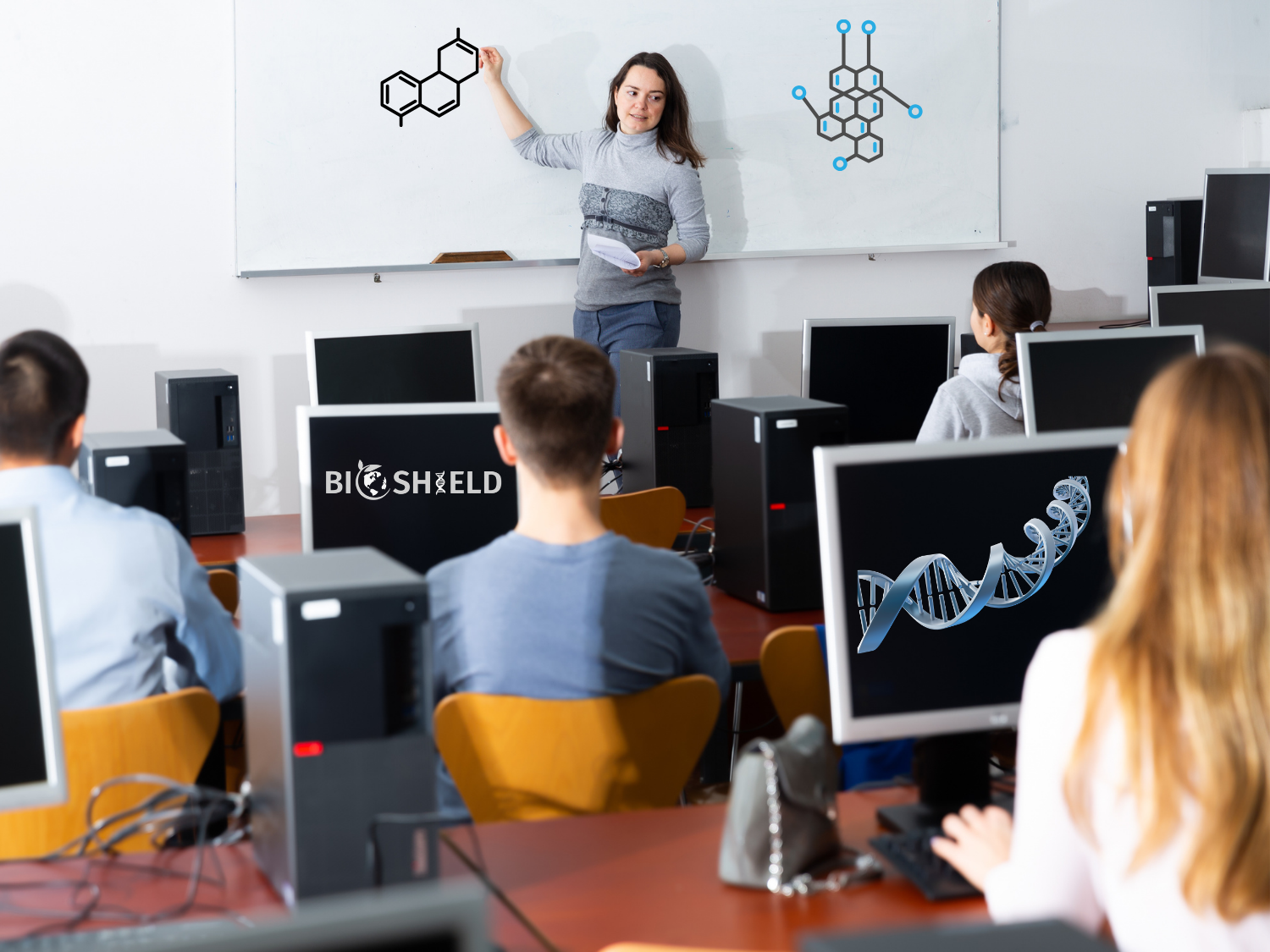
BIOSHIELD answers this with animated video tutorials that explain innovations and challenges in the biotechnology sector and their importance for mitigating the climate crisis. Short animations suit this subject because they make invisible mechanisms visible and compress slow processes into minutes. We name four further advantages accordingly:
- Students can watch at a time that suits them.
- They can pause and replay difficult sections.
- They can engage and participate more.
- They can retain more because cognitive overload is reduced.
Most importantly, the videos make flipped learning possible. Bergmann and Sams (2012) and Talbert (2017) note that flipped learning depends on video, yet most teaching videos aren't made public. Open, multilingual videos can remove that barrier for any biotech department.
Teaching Challenges and the Role of Technology
The BIOSHIELD curriculum combines digital tools and teaching approaches to address common challenges in agricultural biotechnology education.
| Teaching challenge | Technology used in the curriculum | What it adds |
|---|---|---|
| Abstract, invisible processes | Animated video tutorials on mechanisms and applications | A shared mental model before students enter the laboratory |
| Limited contact and laboratory time | Flipped learning: videos and readings studied before class on the learning platform (Moodle) | Class time is freed for discussion, wet-lab work and projects |
| Field and landscape scale | QGIS with open satellite and soil data, interactive web maps (Module 3) | Links micro-level biology to real farming conditions |
| Working with experimental data | Dry-lab analysis and statistical software (SPSS) | Data skills that the industry expects of graduates |
| Idea generation in teams | Padlet pages and shared digital boards | Every idea is visible, comparable and kept for later stages |
| Mixed languages and backgrounds | Five language versions, subtitles, self-paced viewing | Inclusive access, including for students who need extra support |
| Communicating science | Student-made videos, posters and short pitches | Practice in explaining solutions to non-specialists and industry |
On smaller screens, scroll horizontally to view all three columns.